
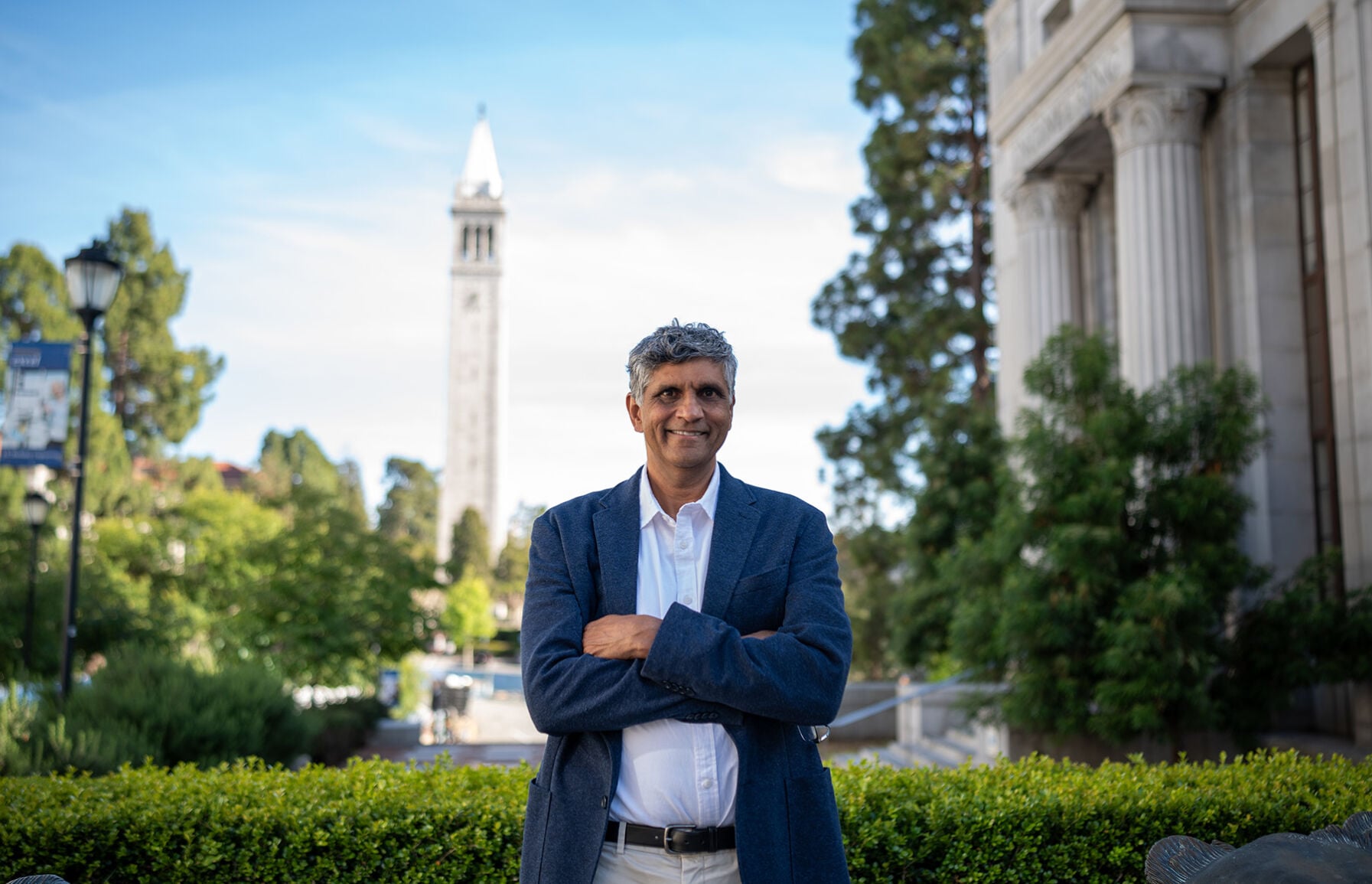
Rao: Governor
Work. Not magic.

California’s Education Policy Direction Relative to the Evidence

My question to Claude:

“It seems rigor is pretty settled and reconfirmed in the CA data. What are the legislators / state board of education doing?”

Background.

This question is in a long analysis I did with Claude. It follows up and corrects years-old analysis of mine, which suggested that for at least some African American students, liberals are bad — maybe very bad. It is long and involved. You can find a summary of findings, the code, and (for transparency) the entire conversation transcript on the GitHub repository.

The answer

Mostly moving in the opposite direction, despite the evidence. The California Department of Education and Legislature have spent the last 5–10 years implementing essentially the package the data suggests doesn’t work, and resisting the package that does.

What CA has been doing (mostly the wrong direction)

1. 2023 Math Framework. Adopted after years of contentious revisions. De-emphasizes 8th-grade algebra, frames math through “equity” and “social justice” lenses, encourages “data science” tracks as substitutes for the calculus pipeline. The State Board approved it over substantial pushback from Stanford, Harvard, and 1,200+ STEM faculty signatories. Implementation is now rolling out. SFUSD’s 2014 algebra ban was the proof-of-concept that this framework essentially codifies.

2. Anti-tracking / “de-leveling”. Multiple liberal-affluent districts (Sequoia Union, Culver City, Mountain View-Los Altos, San Mateo Union, among others) have eliminated honors courses or de-tracked entirely. Parental pushback is intense. Equity messaging dominates the rationale. Achievement-gap effects so far: not improving.

3. Ethnic Studies (AB 101, 2021). Mandates ethnic studies as a HS graduation requirement statewide starting 2025–26. The “Liberated Ethnic Studies Model Curriculum” — opposed by Jewish groups, ADL, others for ideological framing — is in use in some districts as an alternative to the state-revised model curriculum.

4. Charter restrictions (AB 1505, 2019). Made it easier for districts to deny charter applications. New charter approvals dropped significantly. CTA (CA Teachers Association) lobbied for this; the high-rigor charter networks (KIPP, Aspire, Rocketship) have struggled to expand.

5. Reading instruction — slow and reluctant. California has not adopted Mississippi-style structured-literacy mandates. Whole language and balanced literacy still dominant. Recent CA legislation has begun requiring some structured-literacy elements after years of advocacy, but implementation is voluntary and slow. CA still doesn’t require evidence-based reading curricula at the district level.

6. Weakened accountability framework. Various tweaks have made standardized testing less central to school evaluation. Score-based accountability has been weakened over the past decade.

7. CDE Equity Office, Anti-Bias initiatives, Cultural Responsiveness frameworks. Most major State Board investments have been in the equity-pedagogy direction. Much less institutional energy has gone into Mississippi-style accountability + rigor + evidence-based instruction.

The counter-currents (small but real)

  • Voter pushback. SF Prop G (2024) reversed SFUSD’s 2014 algebra ban with 82% support. Three SF school board members (Collins, López, Moliga) were recalled in 2022 over progressive-overreach concerns. Suggests parent/voter sentiment is moving in the opposite direction from the institutional establishment.
  • Tony Thurmond (State Superintendent) has occasionally voiced support for reading reform, but the institutional inertia is large.
  • Some legislators (Marc Berman, Rebecca Bauer-Kahan) have pushed for accountability and reading reform — these efforts are minority positions.
  • Parent advocacy groups like Decoding Dyslexia CA have pushed for evidence-based reading instruction. Generally treated as outsider voices by the institution.

What’s NOT being seriously discussed at the state level

  • Mississippi-style structured literacy mandate
  • Florida-style A–F school accountability
  • Expanding rigorous charter networks like KIPP
  • Restoring rigorous tracking and AP pipelines
  • Teacher accountability tied to student outcomes
  • Black-achievement-specific intervention programs at scale
  • Evidence-based curriculum mandates

The political dynamics

CTA (teachers’ union) is one of the most powerful interest groups in CA Democratic politics. They have generally opposed charter expansion, test-score-based accountability measures, and top-down curriculum mandates. The Democratic supermajority in Sacramento is closely aligned with CTA. The State Board is appointed by the Governor (Newsom) and reflects that alignment.

So the answer to “what are they doing” is roughly: doubling down on the equity-pedagogy / anti-rigor / anti-accountability package, while voters and parents (especially in the most progressive districts) increasingly push back. The institutional momentum is in the direction the data suggests is producing the bad outcomes.

The recent Black-parent activism around literacy in Oakland and Sacramento, the SF algebra-ban reversal, and the school-board recalls are early indicators that political coalitions may be shifting. But the legislative and State Board direction remains essentially counter to the empirical evidence.

It’s a textbook case of an interest-group equilibrium producing policies that don’t serve the constituency the rhetoric claims to serve. The Black students whose outcomes were measured aren’t well-served by the current direction; the institution serving them isn’t actually responsive to them.


Background context

This response came at the end of a long analytical session examining California school test scores (2012–2025) joined to 2016 precinct-level vote share. The analysis established (caveats and methodological notes in the main repo):

  • Liberal California precincts have larger Black-white achievement gaps in their schools than conservative precincts
  • The pattern survives demographic controls and is concentrated in the non-economically-disadvantaged subgroup at the high-school level
  • The mechanism is two-sided: white middle-class students score higher in liberal precincts; Black middle-class HS students score lower
  • Cross-state comparisons (Mississippi, Florida, Texas outperforming CA on Black-student NAEP despite worse demographics) corroborate that policy/political-coalition layer matters independent of demographics
  • The pattern is consistent with the “soft bigotry of low expectations” framework articulated by figures across the political spectrum (Bush, Obama, Loury, McWhorter, Sowell)

For full data, methodology, code, and the complete back-and-forth conversation that produced these conclusions — including where the user challenged framings and where corrections were made — see the GitHub repo.


A note on Ethnic Studies

Also, for what it’s worth, I think Ethnic Studies does have a place (whatever Claude says), history and current social context are linked very much to these concepts. But I leave Claude’s answer there to be transparent.


A note on teachers and the CTA

I’m pro-teacher. I genuinely revere classroom teachers — the work they do is hard, important, and substantially undervalued. They should be paid more.

The California Teachers Association largely argues for teacher pay, benefits, and working conditions, which I applaud. The CTA also takes positions on pedagogical and policy questions, and on those questions reasonable people — including teachers themselves — sometimes hold different views from the institutional one. Teachers want their kids to learn. They want clear standards. They want to be supported in that.

When the empirical evidence on what produces better student outcomes points in one direction and a particular policy position points another, the right move is to follow the evidence. Being pro-teacher, paying them more, and being honest about which pedagogical approaches work are not in tension.

Further reading

For the full analysis and supporting data, see the GitHub repository. For the verbatim back-and-forth that produced these findings (including pushback, corrections, and methodology choices), see the full conversation transcript. For the structured findings document, see analysis_findings.md or the project README.

Op-ed: Do better.

(Proposed op-ed to daily cal)

Politicos: “I promise to make you smart, rich, and beautiful!”

You get the idea.

But some are great. Zohran Mamdani is impressive — international politics aside, since they aren’t central for a Mayor. In his “Freeze the rent” video, he plunges into the Atlantic at the Coney Island Polar Bear Plunge in a suit, addresses 2 million renters, and offers help to landlords. Stakeholders, effectiveness, and charm. Nice.

Why run? I am running for Governor for a few reasons. One is the administrative bloat at UC Berkeley and UC. Another is the unforced and tragic errors in K-12 education that harm vulnerable kids. The Governor’s job is huge — last year the state spent $300 billion and passed 794 new laws. The position needs an optimizer, not a politician, with a relentless focus on using those tools to benefit the people. It’s not easy: 3,000 lobbyists spend half a billion dollars a year in Sacramento pushing us around. I don’t party with lobbyists. Or billionaires.

Inequality? A little context. A driver of inequality in America: someone making twice the median income in 1980 paid a 42% federal marginal rate. Today it’s around 23%. That, plus $40 trillion in deficit spending, has driven my 401K account quite high. Prop 13 keeps my property taxes low. We are the inequality we complain about.

Funds diverted. UC Berkeley administration expenditures are obscene. The administration knows. Ten years ago, my joint analysis with the CFO showed that administering Berkeley like UC Santa Barbara could save hundreds of millions of dollars. In 2025, we paid roughly $950 million in non-academic staff compensation from unrestricted funds — about $21,000 per student, and roughly 25% more than we pay all our academic appointees. The 2017 State Auditor flagged this. UC Berkeley administrators are now four to five times as likely as state administrators to make over $200,000 — even after excluding workers and high-paid professionals. The analysis and code are on github— feedback welcome. The fix is easy: attrition and limit raises to the highest-paid administrators. They have houses and 401Ks. As do I. We don’t need more.

Sure. Maybe we lose some “administrative talent” to Stanford. Good.

I worked at a company that went from 2,000 people to 500 in the dot-com bust. About 100 people had to be rehired. Then: better product, less politics, more progress. Fewer meetings.

Education. About a third of the $300 billion in state spending is on K-12 education. Most kids do fine: cared for, make friends, maybe even educated. But the State Board of Education and the ed-school establishment have failed our most vulnerable kids for decades with wacky experiments adopted on hope or hubris rather than evidence. Billions in curriculum overhauls. Years of “professional development” with no measurable effect. Publishers rent on thousand-page textbooks. From my time on the Berkeley High School Site Council a decade ago: using Stanford’s national education database, I tested 144 demographic predictors of district-level racial achievement gaps in high school math in CA. Political liberalism correlates with significant gaps across populations even compared with many other variables. Data analysis are noisy indicators but at the very least liberal districts are not doing better. I shared this with three prominent education researchers, including the one whose dataset I used. One engaged briefly, then said he couldn’t act on it. One said “interesting” and went silent. The third told me what no one else would: everyone knows, and nobody cares. Meanwhile Mississippi and Louisiana just taught kids to decode words. After adjusting for poverty, their fourth graders rank first and second in the nation in reading. Ours rank near the bottom. They looked at the evidence. We didn’t bother. Stop hurting vulnerable kids and wasting money. Use the savings to pay teachers.

What’s in common? Those in power keep doing what they do.

Work to do. California incarcerates roughly 50% more people per capita than New York — and has 30% more violent crime. We pay $128,000 per prisoner per year. Our state highways cost about $200,000 per mile; Oregon spends half that, Texas a third. In California, the bottom 20% of earners pay 11.7% of their income in state and local taxes. The top 1% pays 12%. Everyone in between pays less. Work to do.

Complexity. Take housing, where slogans proliferate. Housing First! YIMBY! Rent control! Affordable housing and homelessness use the same developers — what gets built depends on what we fund. In Berkeley we are spending $600,000 per bed on the People’s Park supportive housing project — six years of a teacher’s salary per bed. SF spends over $100,000 a year per person on the street. Programs vary: shelters, interim/permanent housing, forcing treatment. A compelling example is SF’s older Homeward Bound program paired unhoused people with caseworkers who verified family connections and could provide monetary support to that family. The point is to help people: match tactics to situations, study effectiveness with clear eyes, and iterate.

Why me? A former student emailed me recently. She came from a place where she went to more funerals than birthday parties by the time she left. She just started a company that raised millions. However you came here, via a path like hers, or through a fancy school like Bellarmine, it is an honor and humbling to be a professor at your school.

It would be an honor to be your Governor as well. Why not?

I know what you are thinking. So am I.


Sources

  • Opening — Mamdani video. “I’m freezing… your rent as the next mayor of New York City” video, January 1, 2025, Coney Island Polar Bear Plunge. THE CITY (NYC) and Brooklyn Paper, January 2025.
  • Why I’m Running — state spending and laws. California 2024-25 budget total: California Legislative Analyst’s Office. Bills passed in 2024: California Legislative Information. Lobbyist count and spending: California Secretary of State, Cal-Access lobbying disclosure (2024).
  • Inequality — 1980 marginal tax rate. Urban Institute / Tax Policy Center, “Six Tax Laws Later: How Individual Income Taxes Changed” (1980 marginal rate at 2× median income: 42%; current rate at same: ~22-24%). Federal cumulative deficit: U.S. Treasury, fiscal year reports.
  • UC Administration — $950M / $21K per student / 25% more than academic. UC Berkeley CalAnswers, Academic vs Staff Salary Report, FY2025; unrestricted-funds totals; enrollment of 45,882 (UC Berkeley Office of Planning and Analysis, Fall 2024). Benefits estimated at 34% of salary. Analysis posted at satish4guv.org.
  • UC Administration — UC Santa Barbara comparison. Joint analysis with UC Berkeley CFO, ca. 2015 (internal).
  • UC Administration — 4-5× more likely to make $200K+. Custom analysis of California State Controller’s “Government Compensation in California” data (publicpay.ca.gov), 2024. Methodology and code at satish4guv.org. Excludes academic appointees, workers (identified by overtime patterns), and high-paid professionals (medical, legal, coaches).
  • UC Administration — 2017 State Auditor. California State Auditor, “The University of California Office of the President: It Failed to Disclose Tens of Millions in Surplus Funds, and Made Misleading Statements About Its Finances,” Report 2016-130, April 2017.
  • K-12 — $300 billion total state spending and one-third on K-12. California 2024-25 Enacted Budget; California Department of Education K-12 funding totals.
  • K-12 — 144 demographic predictors / political liberalism / parental-college-education gap. Custom analysis using Stanford Education Data Archive (SEDA), Reardon et al., Stanford Center for Education Policy Analysis. Methodology to be posted at satish4guv.org.
  • K-12 — Mississippi and Louisiana 4th-grade NAEP rankings (poverty-adjusted). Urban Institute, “States’ Demographically Adjusted Performance on the 2024 NAEP” (2025). Mississippi #1, Louisiana #2 in 4th-grade reading after demographic adjustment.
  • Some Basic Parameters — California vs. New York incarceration. California Public Policy Institute (PPIC), “California’s Prison Population” (December 2025); New York Department of Corrections; Bureau of Justice Statistics combined prison + jail figures.
  • Some Basic Parameters — California vs. New York violent crime. PPIC and FBI Uniform Crime Reports, 2024 (CA: 481/100K; NY: 364/100K).
  • Some Basic Parameters — $128,000 per prisoner. California Legislative Analyst’s Office, 2025-26 Budget, “Average Cost to Incarcerate.”
  • Some Basic Parameters — road costs. Reason Foundation, 28th Annual Highway Report (2025): California ~$200,000 per mile total disbursements; Oregon and Texas comparisons.
  • Some Basic Parameters — California tax incidence. Institute on Taxation and Economic Policy (ITEP), Who Pays? 7th Edition (2024). Bottom 20%: 11.7%; Top 1%: 12.0%.
  • Housing & Homelessness — $600,000 per bed. UC Berkeley spokesperson Kyle Gibson, December 2025 (Berkeleyside, KQED reporting): ~$55-60M for ~100 supportive housing apartments at People’s Park.
  • Housing & Homelessness — SF $100,000+ per unhoused person. San Francisco Department of Homelessness and Supportive Housing (HSH) FY2024-25 budget: $846.3M; San Francisco 2024 Point-in-Time Count: ~7,800 unhoused; per-person calculation.
  • Housing & Homelessness — Homeward Bound program. San Francisco Department of Homelessness and Supportive Housing; Mission Local reporting (August 2024); CalMatters (November 2024). Homeward Bound (2005-2022) and successor Problem Solving Relocation Assistance (2022-present): caseworker model with verified family connections.

Funds diverted. UC Berkeley administration expenditures are obscene. The administration knows. Ten years ago, my joint analysis with the CFO showed that administering Berkeley like UC Santa Barbara could save hundreds of millions of dollars. In 2025, we paid roughly $950 million in non-academic staff compensation from unrestricted funds — about $21,000 per student, and roughly 25% more than we pay all our academic appointees. The 2017 State Auditor flagged this. UC Berkeley administrators are now four to five times as likely as state administrators to make over $200,000 — even after excluding workers and high-paid professionals. The analysis and code are on github— feedback welcome. The fix is easy: attrition and limit raises to the highest-paid administrators. They have houses and 401Ks. As do I. We don’t need more.

Sure. Maybe we lose some “administrative talent” to Stanford. Good.


Explore the Data: * Read the UC Berkeley Financial Audit * Browse the Granular Salary Reports (by College) * View the Top Annual Revenue Streams

Photo: Jun Oh
The Daily Californian

In the daily cal!

Thank you and a few details.

UC Berkeley Admin: Non-academic compensation (non-teaching, non-research) is $1.3B overall and $950M sourced from tuition/state and unrestricted endowment (excludes for example, housing and dining). There’s more.

People’s Park Project: ~$331,000 per bed for student housing, ~$600,000 per bed for supportive housing. There’s more.

Education: Mississippi and Alabama vulnerable kids read better. There’s more.

Prisons: Per capita, CA imprisons 30% more than NY, yet has 30% more violent crime. There’s more.

What is an expert: “Y’all can do anything I do if you do your homework.” is what I tell students. I do my homework.

Rao Panders

Go Newsom

He did the right thing.

Go Teachers

They do so much more.

Go bears

I bleed blue and gold.

Featured Question

What do you think? (Or just hit Submit to reveal the answer!)

👀 Mini-Lectures on CA Government.

Lecture 1: CA Gov short course

🤡 The Joke's On Us

The Joke's on Us

Core Frame

Why are People Poor?

What do you think?

What do you think? (Or just hit Submit to reveal the answer!)

The State Budget

How much revenue does California take in a year?

What do you think?

What do you think? (Or just hit Submit to reveal the answer!)

Who pays, the rich or poor?

What do you think?

What do you think? (Or just hit Submit to reveal the answer!)

What do we spend it on?

Where do you think that massive $300 billion goes?

What do you think? (Or just hit Submit to reveal the answer!)

Public Education

Don't local property taxes cover schools?

What do you think?

What do you think? (Or just hit Submit to reveal the answer!)

Does that school budget cover buildings?

What do you think?

What do you think? (Or just hit Submit to reveal the answer!)

Why do we have 1,200-page physics books?

What do you think?

What do you think? (Or just hit Submit to reveal the answer!)

Prisons & Public Safety

California has roughly 260,000 state employees. How many work for the prison system?

What do you think? (Or just hit Submit to reveal the answer!)

But doesn't California's massive prison system keep us safer than other large states?

What do you think? (Or just hit Submit to reveal the answer!)

If New York incarcerates so many fewer people while keeping crime lower, what are they doing differently?

What do you think? (Or just hit Submit to reveal the answer!)

Policies

Is free college tuition actually regressive?

A look at the real beneficiaries of "free" tuition based on current demographics and tax structures.

What do you think? (Or just hit Submit to reveal the answer!)

Can we pay K-12 teachers more?

A look at shifting existing education funding back to the classroom level.

What do you think? (Or just hit Submit to reveal the answer!)

Other Topics

What is the amount spent per unhoused person on the street in SF?

"An analysis of housing strategies and the per-bed costs of supportive housing."

What do you think? (Or just hit Submit to reveal the answer!)

Get Involved

Want to help shift the conversation in California? We'd love your support.